
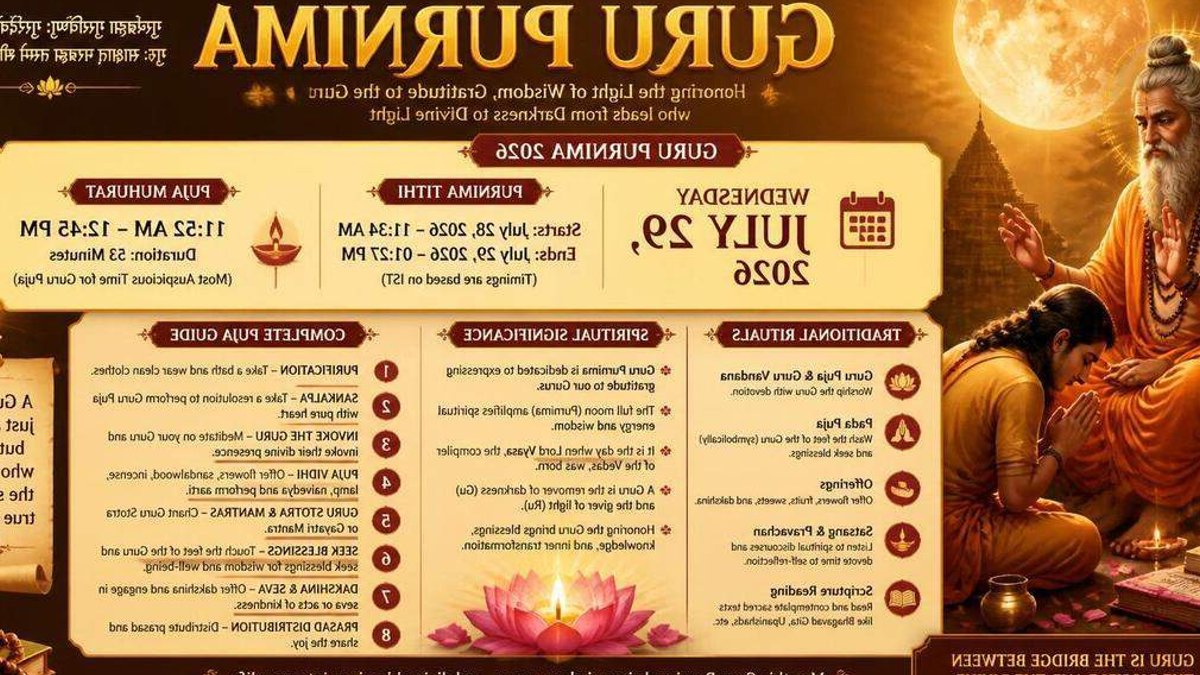
Guru Purnima, a festival central to Sanatan Dharma, will be observed on Wednesday, July 29, 2026. The day honors teachers, spiritual guides, and mentors who dispel ignorance and lead others toward knowledge. It also marks the birth anniversary of Maharishi Ved Vyasa, the sage who compiled the Vedas and authored the Mahabharata.
Date and significance
The festival falls on the Ashadha Purnima, the full moon day of the Hindu month of Ashadha. In 2026, the Purnima Tithi begins at 6:18 PM on July 28 and ends at 8:05 PM on July 29. Since the tithi is present at sunrise on July 29, that day is designated for celebrations.
Buddhists observe the occasion to mark the day Gautama Buddha delivered his first sermon after enlightenment. In yogic traditions, the festival connects to Lord Shiva, who is believed to have shared yoga’s wisdom with the Saptarishis as the first teacher, or Adi Guru.
The rituals that define the day
Devotees typically begin with a holy bath, often during Brahma Muhurat (the pre-dawn period considered auspicious). Many wear yellow or white, colors linked to purity and learning. The puja must be performed before the Purnima Tithi ends at 8:05 PM, though daylight hours are preferred.
Related: Indian Textile Exporters Seek Faster Trade Pact Amid New Tariffs
A common practice involves lighting a ghee lamp and incense, then offering flowers, fruits, and sweets to idols or images of gurus, deities like Lord Vishnu, or photographs of personal mentors. The Guru Mantra—Guru Brahma Guru Vishnu Guru Devo Maheshwarah, Guru Sakshat Parabrahma Tasmai Shri Gurave Namah—is recited alongside prayers or scripture passages from the Bhagavad Gita or Guru Gita.
Touching the feet of elders or gurus, either in person or symbolically through a phone call, remains a key tradition. Many donate food, books, or educational materials, as charity on this day is thought to bring spiritual benefits. Some devotees fast or spend the day in meditation.
Who is honored and its significance
The festival extends beyond formal teachers. Parents, life coaches, and anyone who has shaped a person’s values or decisions are included. The belief holds that knowledge is life’s greatest wealth, and those who share it—whether through education or lived experience—deserve gratitude.
Prayers offered on this day are believed to strengthen wisdom, improve decision-making, remove ignorance, and inspire positive growth in both personal and spiritual life.
Grand gestures aren’t required. Reading a spiritual text, feeding a cow, or reflecting on lessons learned can hold meaning. The focus lies on humility and recognizing guidance as a gift.
Holiday status
Guru Purnima is not a nationwide public holiday in India. Some states, educational institutions, and spiritual organizations treat it as a restricted (optional) holiday. Schools, ashrams, and yoga centers may close or host events, while government offices and most businesses operate normally.
Local holiday calendars or institutional policies provide the best confirmation. Temples and spiritual centers often organize satsangs (spiritual gatherings), discourses, and puja ceremonies throughout the day.
Outside India, observance depends on individual or community traditions. Some Hindu and Buddhist groups abroad may hold events, but it remains uncommon in most countries.
The festival’s meaning isn’t confined to a single tradition. Whether through a formal puja, a quiet moment of thanks, or an act of kindness, the day reminds people that wisdom is a shared path—and those who guide others deserve appreciation.


