
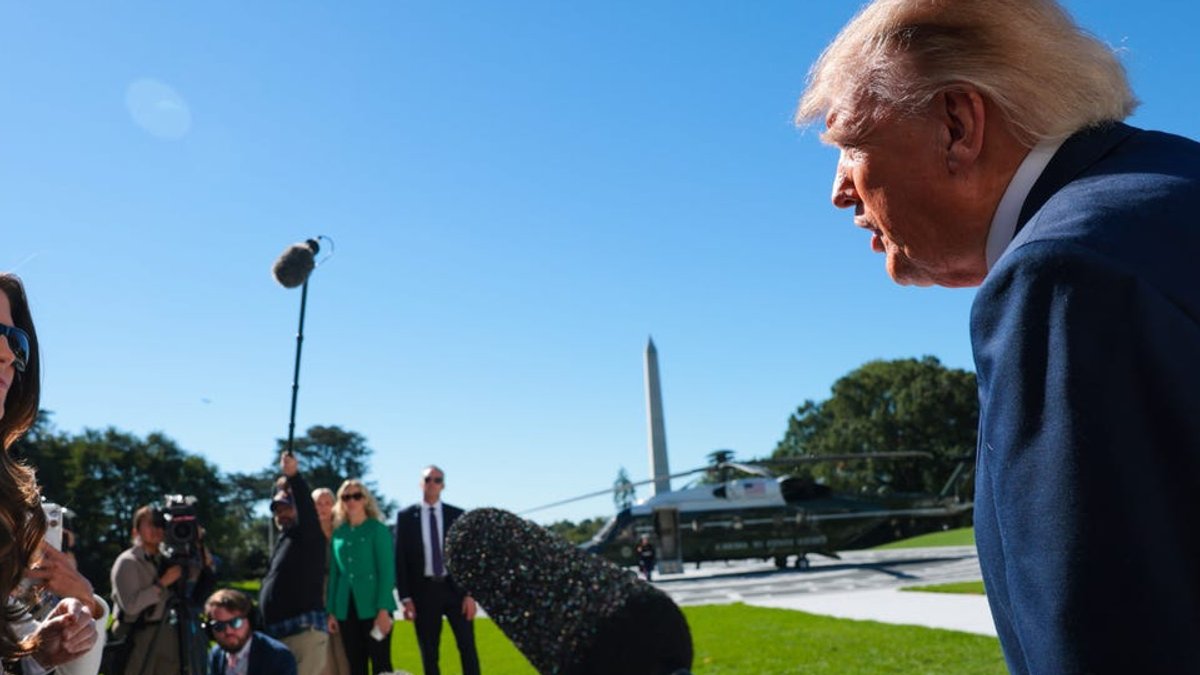
U.S. District Judge Timothy Kelly appeared ready Thursday to broaden his earlier order that halted President Donald Trump’s ban on three news outlets from the White House.
Judge appears ready to extend block on media ban
Trump barred POLITICO, CNN and MS NOW from the West Wing earlier this year. The judge already lifted the ban last month, issuing a two-week restraining order, which he extended through Tuesday.
During the hearing, the magistrate signaled he could issue a more durable injunction that would keep the three outlets inside the White House for the duration of the litigation, potentially lasting months.
He described the Justice Department’s claim that the ban served national-security interests as “an uphill climb,” noting that Trump himself said the move was motivated by displeasure with the outlets’ coverage.
Read Also: Amazon lays off hundreds of employees worldwide
Legal arguments clash over due process
The magistrate’s original ruling found the ban likely violated the news organizations’ due-process rights because the White House acted without notice or any identifiable standards for credentialing.
“That’s probably the biggest hurdle you all have,” the judge told the government, as a crowd of media executives, reporters and First Amendment attorneys filled the Washington, D.C., courthouse.
The court’s focus on due-process reflects a longstanding principle that the executive cannot bar press access merely for disagreeable content.
Boutrous urged Kelly to reject Trump’s ban for a second reason: a violation of news organizations’ First Amendment rights and an effort to chill the free press. Boutrous argued that a recent interview Trump gave to Time magazine ‘amounts to a confession’ from the president that he revoked the journalists’ press passes because he considered their stories to be too negative. He cited Attorney General Todd Blanche’s comment that the outlets were banned for “one-sided reporting,” reinforcing the claim that the action was content-based.
Justice Department lawyer Michael Velchik countered that the administration provided due process after the ban took effect, pointing to unsigned White House letters that identified certain stories as “misinformation” or national-security risks. He said the outlets “defaulted” by not responding to those letters, and he repeatedly linked the letters to Trump, even though they were unsigned and the president never publicly acknowledged them.
Read Also: Russian Lab Worker Death Sparks Unverified Plague Rumors
Boutrous, calling this after-the-fact effort a ‘sham process,’ showed the absence of any indication Trump had signed off on – or even had any awareness of – the letters. He argued that the procedural gaps undermined any claim of legitimate security concerns.
Velchik also repeatedly argued that the courts should give the president more leeway than might apply in other contexts, where decisions about reporters’ access are made by federal agencies. When the judge asked whether a president could ban a news organization based on stories proven false, Boutrous said no, while Velchik maintained the decision was within presidential discretion.
Potential impact on press access
Kelly emphasized that his assessment of the issue was constrained by longstanding precedents that forbid the White House from barring access to the West Wing press areas based on disagreements with content, along with requirements that revoking such access must be based on clear standards and potential consequences spelled out in advance.
The Justice Department has expressed disagreement with those precedents, but the judge made clear he is bound to follow established case law.


