
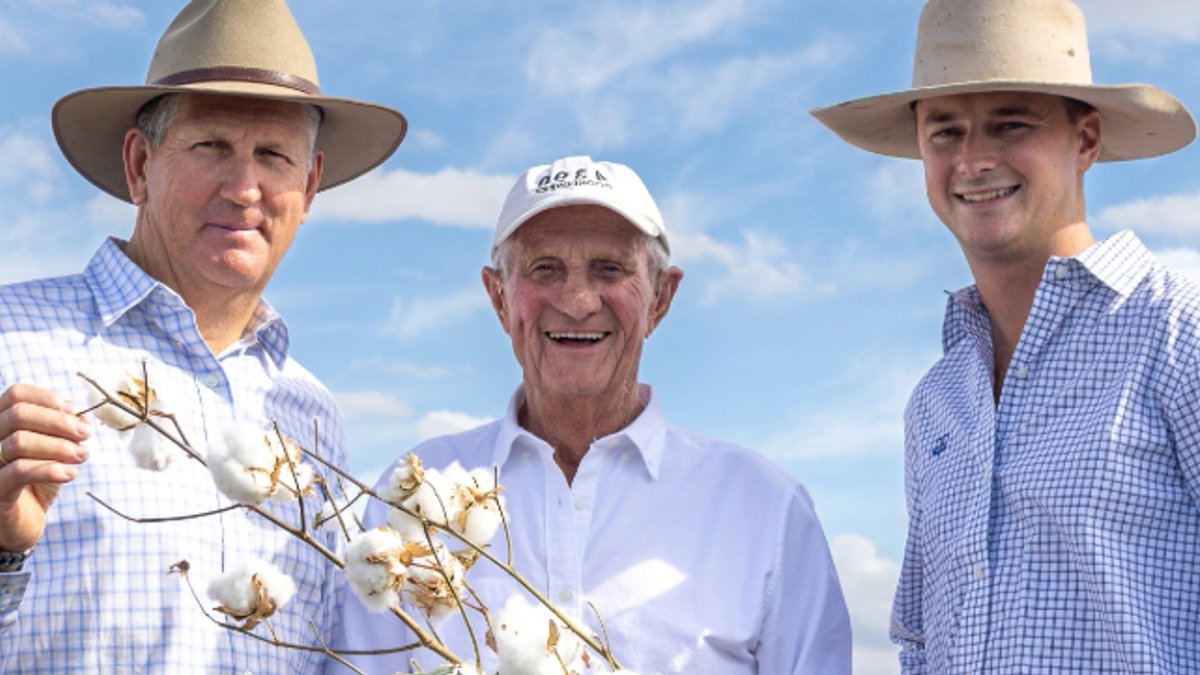
A regional Queensland apparel business has lodged a formal expression of interest to supply the volunteers and officials of the 2032 Brisbane Olympics. Goondiwindi Cotton is vying for the contract to provide the 2032 Olympics uniforms, a move intended to bring the Games’ benefits “Beyond Brisbane” to its rural hometown on the Queensland-New South Wales border. The company is passionate about rural Australia and determined to ensure economic advantages flow through to its local community.
Economic forecasts undertaken by REMPLAN, a company that analyses regional economies, predict that a winning bid for Goondiwindi Cotton would mean an economic output boost of more than $40 million over five years. Backing for the business isn’t limited to its hometown. A national campaign to support the bid, called “Gundygoesforgold,” has already attracted signatures from across Australia.
The Uniform Bid and Regional Growth
Third-generation farmer Sam Coulton founded Goondiwindi Cotton in 1992. He launched the venture to reduce impacts from the boom-and-bust cycles of cotton farming, a venture family have been involved in for over 100 years. Sam started out supplying yarn to the surfwear brand Piping Hot. He then developed the Goondiwindi Cotton brand as a wholesaler in the early 2000s. The business grew steadily for two decades, focusing on high-quality garments that are built to last.
Related: Farm labour crackdown hits Griffith growers
“[Our products] reflect a spirit from the farm – ‘if you make something, you make it to stand a lifetime’,” Sam explains. However, after building relationships with stockists all around the country, COVID-19 brought a sales drought. “We were selling maybe 1,500 garments a year, and we had to shut down with COVID because nobody wanted stock,” Sam recalls. “In response, we put trust in the right people to improve our fledgling e-commerce site. There was a lot of expenditure, but by the end of that year we started selling high volumes.
“That was the jolt we needed, allowing us to sell more in a month than an entire year previously,” he adds. “Now we’re doing double the previous figure and have the capacity to grow a lot more. The business has changed enormously.”
From Farm Yarn to Main Street
As a “man of the land” Sam views business through the prism of farming. He believes success in fashion and retail comes from “having good seed”. And he refers to advertising as “fertiliser”. Similarly, he views e-commerce the way he looks at livestock in the paddock. “People start grazing at 6am in the morning. And the last one will tend to knock off at 10 O’clock at night,” Sam says. “What we need to do is start moving overseas into markets like London and Singapore. [That way] we can have people grazing all night, too.”
Related: Shared offices now offer extra services
Post-COVID revenue allowed Goondiwindi Cotton to complete the “trifecta”. The company found initial traction, then flourished online, and now has a bricks-and-mortar presence in its hometown. Sam opened a flagship store and café in Goondiwindi in June 2025. “You’ve got to have a mixture,” he says. “In the farming game we have a mix of properties and crops, so when it’s dry in one area you’re flying in another. We can do that with our flagship store. When e-commerce is down, our shopping out the front store is picking up. Or our 220 retail partners around the country might be doing well.
“We’ve got a magnificent shop front at our new premises where we also run farm tours,” he adds. “People can feel the soil, and in season the cotton our clothes are made from. They see where their food and fibres grow, they see the great expanse.”
This offering benefits not only his own business, but the whole town. Research reveals that 76 per cent of people who take part in farm tours stay an extra night in Goondiwindi. This supports a community he hopes will continue to flourish alongside the brand’s growth.
Related: AI Business Owners Face Legal Risks
It is unusual to see a business model so deeply rooted in a specific geographic location in an increasingly digital economy. By combining a physical retail presence with tourist attractions, the company has essentially created a destination brand. This approach ensures that the economic value generated by every garment sold remains within the local area, supporting not just the company payroll but also local hospitality and tourism services that might otherwise go to larger cities.
“If you ran a SWOT analysis on our business, everything would tell you that we should be based in Brisbane,” Sam admits. “But we’re not, and we are proud of that. We’re committed to our people here. And we aim to create opportunities for career growth in the region. We can’t just walk into an agency and get somebody else easily, so there’s a strong feeling of loyalty that goes both ways.
“It’s something that makes us proud, Sam adds. “You feel it in your heart, in your bones, and over time you see the result of our hard work in the spreadsheets, too.”


