
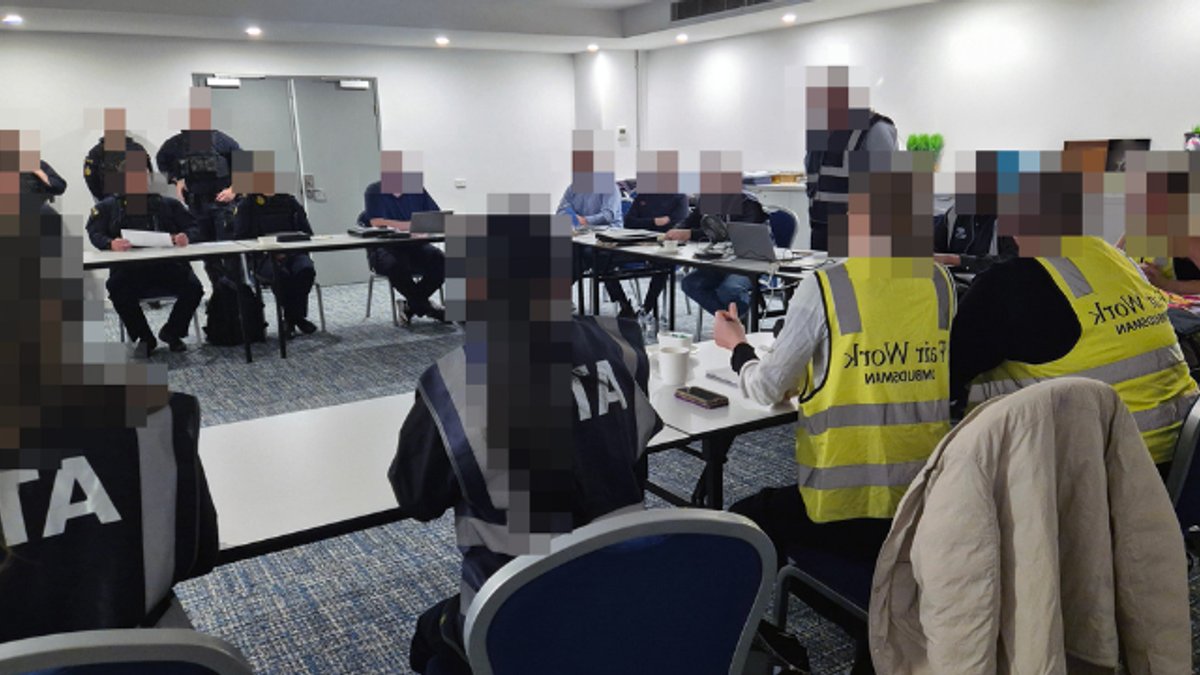
Federal agencies have begun a joint investigation into labour hire providers and growers in Griffith, New South Wales, focusing on compliance failures in the horticulture sector.
Operation Flint targets wage underpayment and tax evasion
The Australian Taxation Office, Fair Work Ombudsman, and Australian Border Force carried out site visits at over 15 farms this week, most of them citrus operations. These inspections form part of Operation Flint, an effort under the Shadow Economy Taskforce.
Agencies selected businesses using risk profiling, data analytics, and shared intelligence. No immediate outcomes have been announced as investigations continue.
Exploitation risks in visa-heavy workforce
The probe examines underpayment of wages, penalty rates, and superannuation, along with failures to provide accurate payslips or lodge activity statements. It also looks at incorrect income and expense reporting, and breaches of the Migration Act 1958, including migrant worker exploitation.
The Fair Work Ombudsman stated the Riverina region, where Griffith sits, ranks among the top five areas for workplace law violations under its Horticulture Strategy 2021–2024. Of labour hire employers checked in the region, 83% had broken workplace rules. The agency highlighted horticulture as a priority because many workers hold visas or are young, increasing their vulnerability.
Anna Booth from the Fair Work Ombudsman said growers must ensure workers receive lawful pay and entitlements, even when using labour hire providers. She noted growers could face liability under the Fair Work Act if they knowingly allow non-compliance.
Reliance on temporary visa holders creates an uneven playing field. Some businesses gain an edge by ignoring labour standards, risking both legal penalties and damage to their reputation as consumers demand ethical supply chains.
Related: AI Business Owners Face Legal Risks
Cheap labour often comes with hidden costs
ATO Assistant Commissioner Tony Goding said the operation aims to improve compliance in Griffith’s agricultural sector. “There’s no room for operators cutting corners or exploiting honest growers,” he said.
Goding warned that outsourcing labour doesn’t remove employer responsibilities. He advised growers to check labour hire providers carefully, noting that unusually low labour costs often signal problems. “Operation Flint is about exposing these practices and making it clear: If you’re not following the rules, you will be targeted.”
In the last financial year, 44 individuals and entities in NSW faced prosecution for shadow economy offences after compliance activities statewide.
Tim Thorley, ABF commander for field operations, said migrant worker exploitation and migration law breaches give non-compliant businesses an unfair advantage. He urged employers to verify workers’ rights through the Visa Entitlement Verification Online (VEVO) system before hiring.
The joint operation follows long-standing concerns about the horticulture sector’s dependence on temporary labour, where wage theft and tax evasion remain persistent. While Griffith is the current focus, agencies have indicated similar probes may expand to other high-risk regions.
Business owners in regions like these should ensure compliance to avoid legal and financial consequences.


