
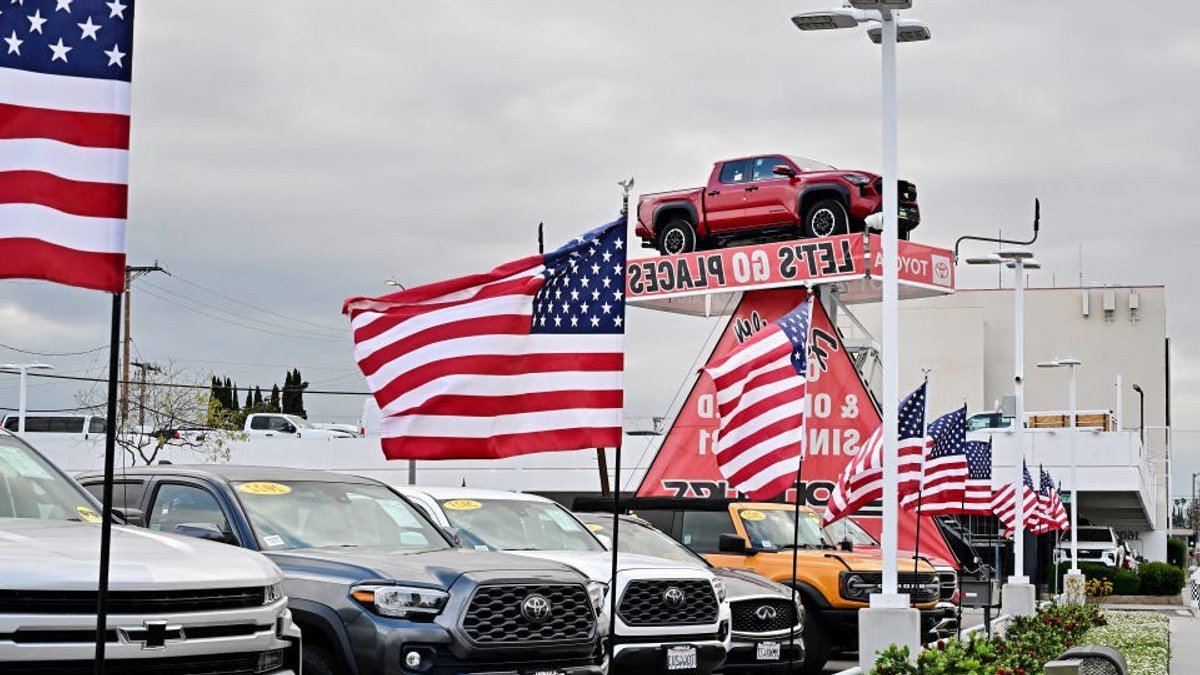
Rising new car prices are outpacing consumer demand for affordable models, creating tension on U.S. dealership lots according to September data from Cox Automotive. The average transaction price for a new vehicle reached $50,562, marking a 1% monthly increase and a 0.7% yearly gain, just $52 short of a record high. Despite these increases, buyers are shifting toward smaller, more budget-friendly vehicles.
“Customers continue to show us that they’re willing to adapt by either going to smaller vehicles, like sedans, or smaller-sized SUVs,” Erin Keating, Cox Auto’s executive analyst, said. Shoppers are also switching brands to stay within budget, she noted. This flexibility has helped limit the overall price surge, though smaller vehicles themselves are driving up their own price tags. The average cost of a compact car rose 3.2% year over year to $27,977, while subcompact SUVs increased 1.5% to $31,213. Four of the five highest-volume segments saw price gains above the industry average, with only compact SUVs experiencing a slight decline of 0.4% to $37,614.
Keating contextualized the price increases against broader inflation, which the Bureau of Labor Statistics reported as 3.7% in September. “The rate of inflation on a vehicle is so far below the standard rate of inflation in the country,” she said. “Going up by 1% or 2% really is still way below historical norms.” Despite this, the industry remains stuck in a 2026 model-year limbo. At the end of September, next-model-year vehicles made up 22.4% of available inventory, up from 12.4% in August but still far below the 38.6% share seen by the same time in 2025.
The slower rollout of updated models has reduced the flow of repriced vehicles to dealerships, contributing to sustained price pressure. Keating predicted average transaction prices would likely rise through the next three months. However, she suggested dealers might introduce incentives to move slower-selling, larger, less fuel-efficient models. Stellantis, Ford, and GM are most likely to offer such discounts as new inventory arrives, she said. “When you have new metal coming in, you’re gonna want to get the old metal moving,” Keating explained.


